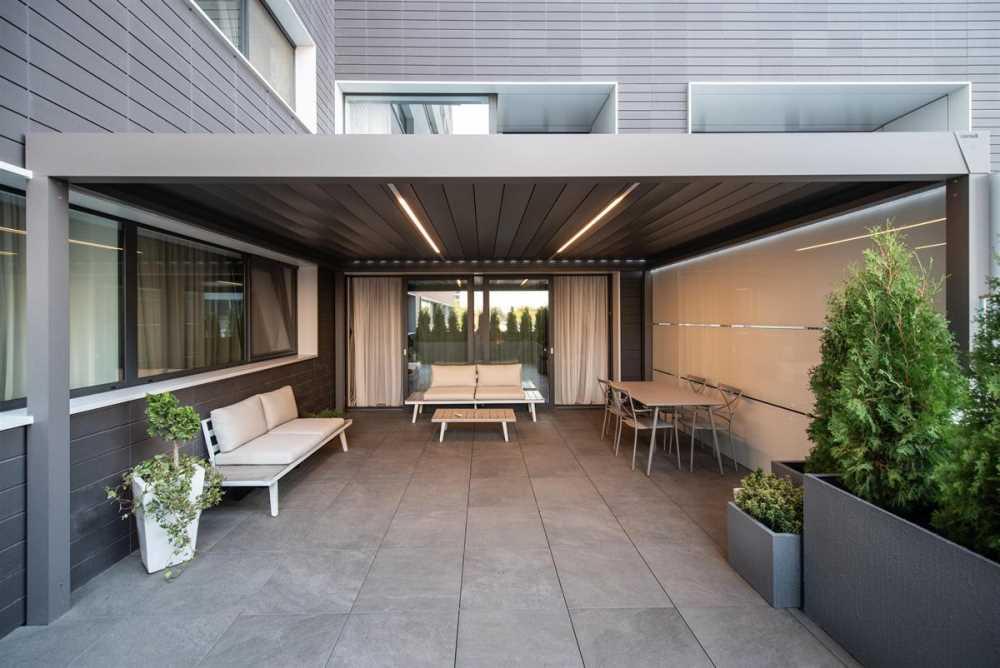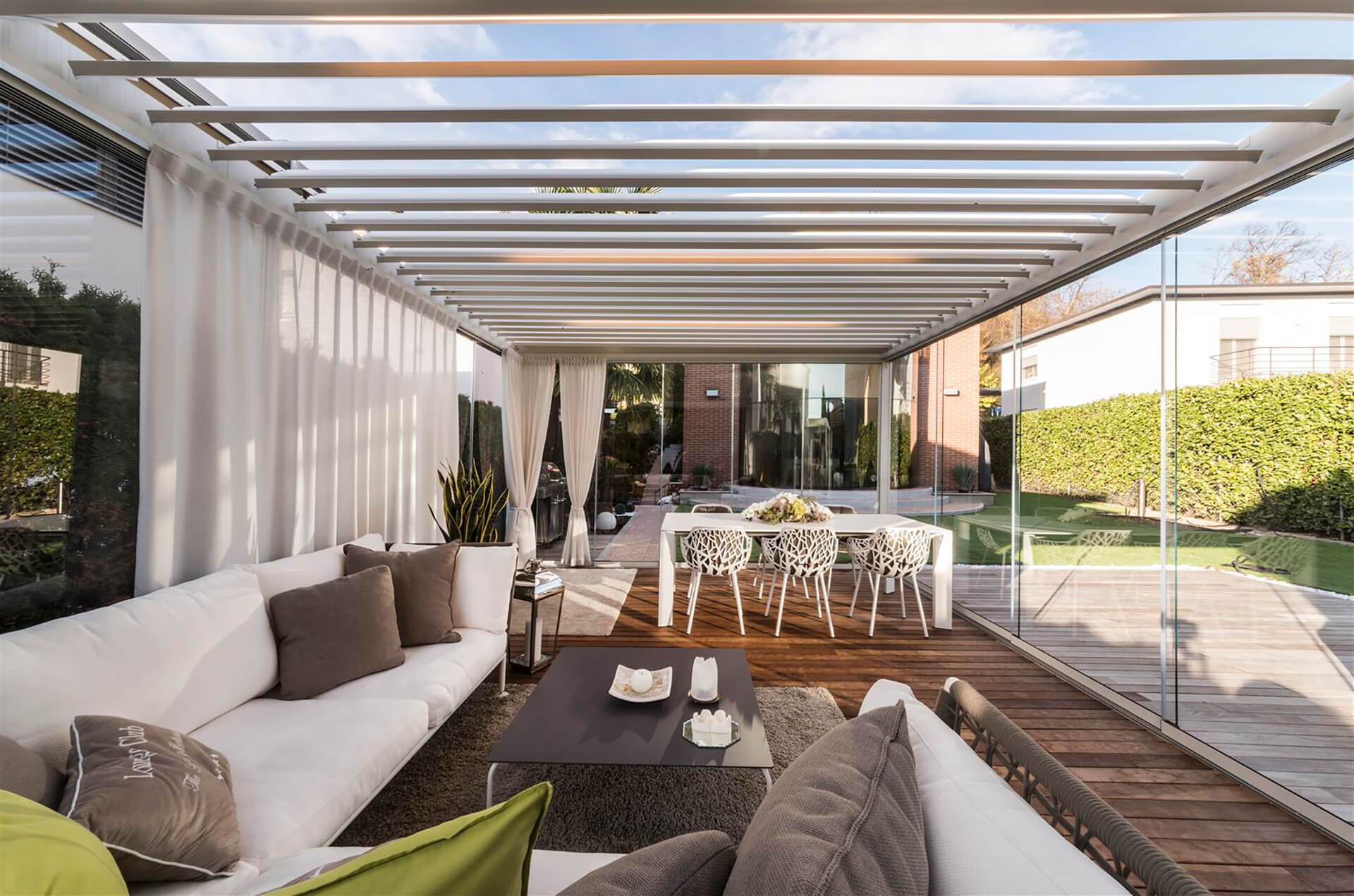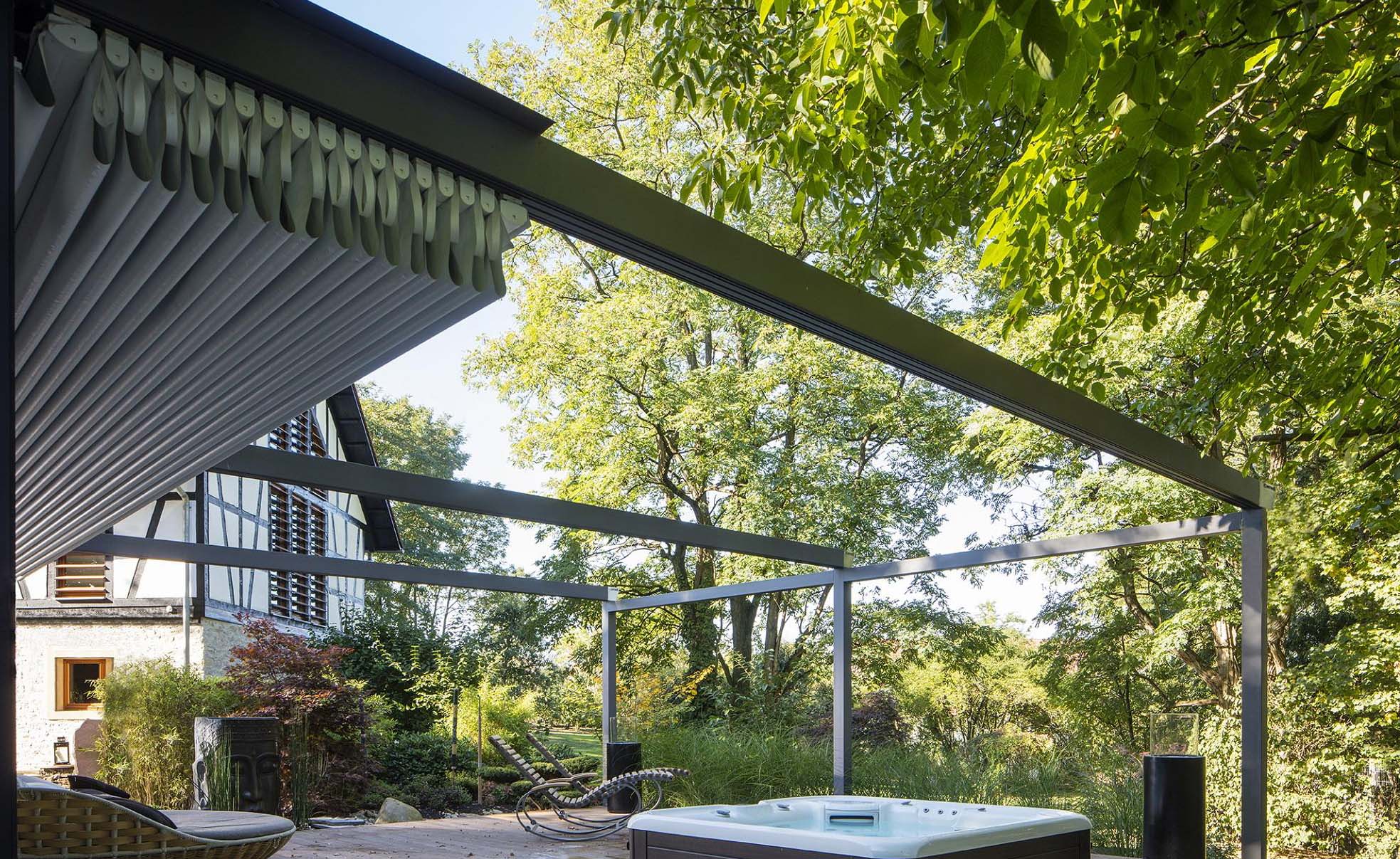
Different types of patios:
Light well: Its layout allows a portion of indirect sunlight to enter the building's interior spaces—hence its name—as well as ventilation. It's attached to the walls of the house and is ideal for a stretched pergola or a shade sail. This way, you can take advantage of the sunlight whenever you want, retracting it to let in all the sunlight, or unfolding it to protect yourself from the hottest hours. Central courtyard: Located, as its name suggests, in the central part of the house. Depending on the available space and the sun's orientation, we can choose a fixed pergola gazebo, where when it rains, the water is channeled through the legs and out to the outside. Or a tensioned pergola, whose material is highly resistant to various weather conditions. Bioclimatic pergolas allow ventilation in a central space with adjustable slats, and allow the roof to be fully opened or closed if desired, or choose the degree of inclination to allow light to enter the interior. Front or Back Patio: Located at the back or front of the house. First, our technicians recommend examining the space, walls, and other details to determine which type of installation is best. If you have a strong, high-quality wall, you can consider a pergola attached to the wall. This option takes up less space and has two legs at the front of the patio. You can enhance your backyard with a gazebo, so you can enjoy your outdoor living space much more year-round. Installing pergolas on interior or exterior patios will help you lower the temperature inside your home in summer and create a perfect microclimate that you can enjoy year-round. They also have significant advantages and are used to give a more modern and minimalist look to the patio where they are installed.